


Let us allow the Resurrection of our Lord to unfold its graces within us!
Dear Dames and Knights, Beloved Brothers and Sisters,
The Resurrection of our Lord is so fundamental to our faith that whoever does not profess Christ’s resurrection from the dead is not a Christian. The apostolic Church grounded the truth of the Resurrection on the conjunction of two essential facts: the empty tomb and the testimony of eyewitnesses who encountered the Risen One. Only these two arguments together support the reality of the Resurrection. If the tomb had not been empty, the Jews or the Romans would have produced Jesus’ body when the disciples claimed that He had risen. Yet if there had been no eyewitnesses who met Him again in person, the empty tomb alone would have proved nothing.
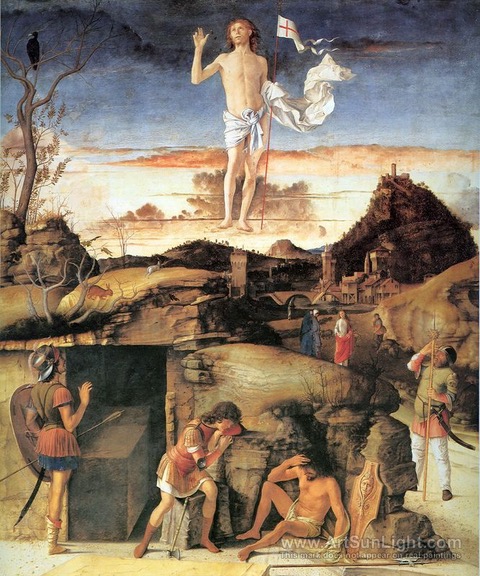
The empty tomb (cf. Mt 28:1–8; Mk 16:1–8; Lk 24:1–11; Jn 20:1) carries a profound message for us, because it once held the body of the dead Christ. We Christians profess in faith that Jesus of Nazareth, the son of Mary, is the Son of the Father, and He alone is the Word who “was in the beginning with God” (Jn 1:2). In our Easter liturgies, we repeatedly confess that we believe in “Jesus Christ, the Son of the living God” (cf. Mt 16:16), in whom “the whole fullness of divinity dwells bodily” (Col 2:9). During Holy Week, and especially throughout the Sacred Paschal Triduum, we open ourselves to the graces of redemption that we have received in Jesus Christ, “for in Him all the fullness was pleased to dwell, and through Him to reconcile to Himself all things, whether on earth or in heaven, making peace by the blood of His cross” (Col 1:19–20).
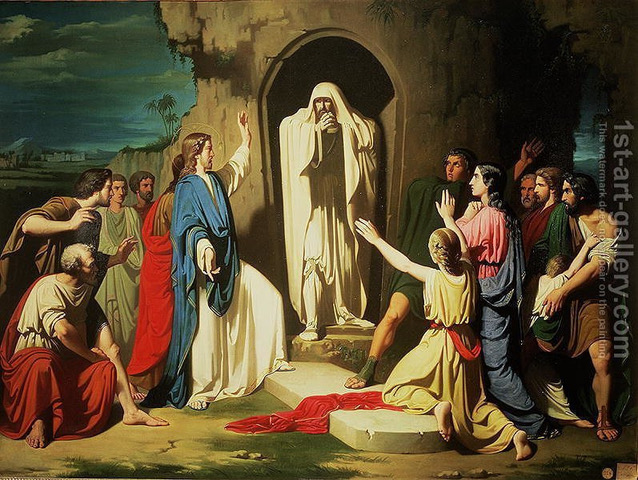
From apostolic times, the proclamation of the Church has been centred on Jesus Christ, who is “the image of the invisible God” (Col 1:15), and also the perfect man, who restored in the sons of Adam the divine likeness disfigured by original sin. We, as believers in Christ, firmly profess with the Apostle: “It is no longer I who live, but Christ lives in me; and the life I now live in the flesh I live by faith in the Son of God, who loved me and gave Himself for me” (Gal 2:20).
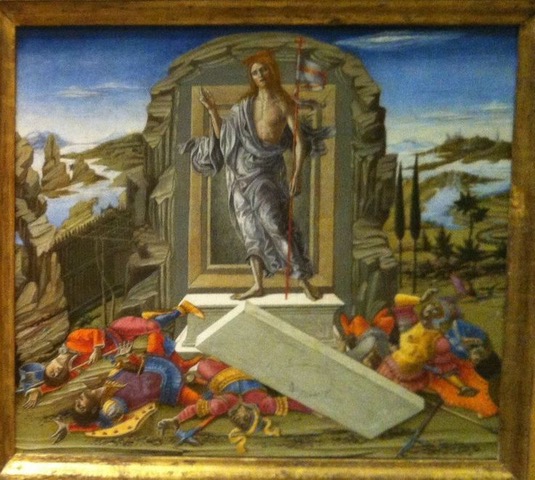
No Gospel account ends with the report of Jesus’ burial; rather, all culminate in the appearances of the Risen Christ. According to the Acts of the Apostles, Saint Peter argued on the day of Pentecost: “God raised Him on the third day and granted that He be made manifest, not to all the people, but to us who were chosen beforehand by God as witnesses, who ate and drank with Him after He rose from the dead” (Acts 10:40–41). Commentators agree that after the appearances of the Risen One, the apostles were marked not only by the emotion of their encounters with Him, but also by a profound inner transformation: the formerly fearful Galilean men became ready to die for Christ. It was evident to all that His Resurrection had changed everything in them.
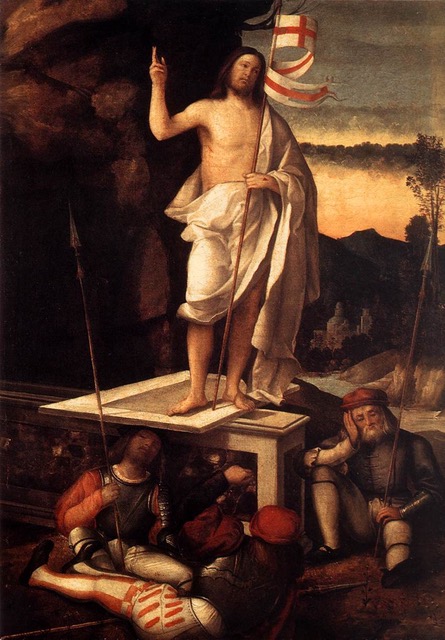
Many people today no longer even set out for the tomb, because in their hearts they have long since closed the story of Jesus. Others may be astonished at the sight of the empty tomb, yet still do not step onto the path of faith, because the resurrection of the dead surpasses their human understanding. At the same time, millions set out for Christ’s tomb: they see its emptiness and believe in Him. In the Church, we celebrate Easter with full solemnity for eight days. During this time, we reflect on the Gospel accounts of the event, so as to see ever more clearly what has happened, and we are invited to encounter the Risen One and recognize Him in the breaking of the bread.
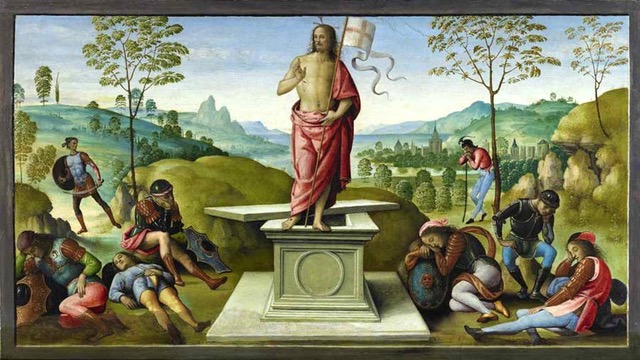
In one of his Easter messages, Pope Francis clearly pointed out that the redemptive work of Jesus Christ cannot be interpreted in a “magical” way, as it does not automatically free us from all earthly suffering and evil. Our faith is not a “magic tool” by which we can compel God to fulfil our wishes or instantly remove our problems. Nor can we celebrate Easter without acknowledging the nights we still carry in our hearts and the shadow of death that continues to hover over our daily lives. As we celebrate that Christ has conquered sin and death, we also recognize that the effect of His Resurrection within us is still unfolding.
On the second day of his apostolic visit in Hungary, on 29 April 2024, at the Papp László Sport Arena in Budapest, the Holy Father encouraged Hungarian youth with these words: “You must know, dear friends, that Jesus rejoices when we achieve great things. He does not want us to be lazy and comfortable; He does not want us to be silent and timid, but rather to be full of life, active, and peacemakers, becoming protagonists of our lives. He never diminishes our expectations; on the contrary, He raises the standard of our desires.”
Dear Dames and Knights, Beloved Brothers and Sisters,
May God grant that the peace and grace of the Risen Jesus Christ accompany us, so that at all times and in every place we may help bear witness to His victory - with the “weapons” of truth, mercy, forgiveness, and love.
Wishing you a blessed Easter, with love,
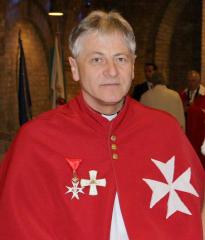
Monsignor Ladislaus Johannis Szakál
Chaplain of His Holiness the Pope
Magisterial Chaplain of KMFAP
Dunajská Streda, Slovakia, 2 April 2026

